VITAORBIT | 10-Slide Investor Pitch Deck 2026
01 / 10 · Title

VITAORBIT

AI readiness intelligence for human spaceflight.A human-in-the-loop decision layer for the next mission-critical task.

Astronaut-first 24-hour forecast Responsible AI Elite sport next

Know whether this person is ready for this task, at this time, and why.

Iwona Fluda, Founder · Investor / R&D Funding Deck · 2026

Physiology Cognition Context Task demand Readiness
forecast
01Astronaut training is the primary pilot market.
02Explainable, task-specific decision support.
03Elite performance is the second market.
02 / 10 · Problem / Opportunity

More data. Still no trusted readiness decision.

Readiness changes hour by hour. High-stakes teams still assemble the answer manually from disconnected signals.

Fragmented evidence

Signals live apart

Wearables, sleep, cognition, workload, medical observations and self-reports sit in separate systems.

Population thresholds

The individual disappears

Generic norms hide personal baselines, physiological context and responses to extreme environments.

Retrospective tools

Most scores look back

Dashboards explain what happened. They rarely forecast readiness for the next defined task and time window.

Manual synthesis

Experts carry the load

Flight surgeons and training leads reconcile competing signals under pressure, without a shared confidence layer.

The market has sensors and experts. It lacks the intelligence layer between them.

03 / 10 · Value Proposition

One answer for the next mission-critical task.

VITAORBIT combines consented physiological, cognitive and operational data into an explainable 24-hour readiness forecast.

24H Forecast window Confidence · drivers · escalation

Decision support, never autonomous clearance.

01

Task-specific: readiness for a defined activity and operational window, not a generic wellness score.

02

Personalised: the model learns within-person change instead of relying only on population averages.

03

Explainable: authorised users see confidence, contributing signals, provenance and uncertainty.

04

Human-controlled: the astronaut, flight surgeon, mission commander or training lead retains final authority.

04 / 10 · Underlying Magic / Technology

Learn the individual. Compound every governed outcome.

The technical challenge is also the moat: safe readiness forecasting from sparse, multimodal, task-linked data.

01

Observe

Connect consented physiology, cognition, self-report, workload and environmental context.

02

Personalise

Learn baseline, variation, response patterns and uncertainty for each participant.

03

Forecast

Estimate readiness for a defined task and time window; expose drivers and confidence.

04

Act and learn

Record the human decision, intervention and verified outcome; update the next forecast.

Defensibility

Task-linked longitudinal data

State, operational context, expert decision, intervention and outcome form a governed evidence loop that is difficult to reproduce.

Trust layer

Accountable by design

Consent controls, role-based access, provenance, confidence scoring, audit logs and human escalation are built into the product architecture.

05 / 10 · Business Model

High-value enterprise contracts first.

B2B feasibility pilots create the evidence and workflow integration required for recurring licences. Pricing is an initial hypothesis to validate, not booked revenue.

Primary entry £50k–150k

Spaceflight feasibility pilot

Six to twelve months of integrations, readiness workflows, expert review and prospective validation.

Enterprise layer £100k–300k

Annual institutional licence

Governed cohort analytics, readiness engine, implementation, research reporting and support.

Second market £30k–120k

Elite-performance licence

Athlete readiness, recovery and training-response application, scaled by cohort and modules.

01 · Paid pilotsFixed-scope validation
02 · PlatformRecurring enterprise licence
03 · ModulesParticipant and expert add-ons
04 · ResearchCohort analytics and model licensing
06 / 10 · Marketing and Sales

Win through access, evidence and trust.

The beachhead is narrow by design: institutional buyers already responsible for medicine, training and operations.

01

Secure anchor access

Sign two to three astronaut-training, analogue-mission or human-performance programmes with defined users and data rights.

02

Co-design the workflow

Build with flight medicine, training and operational experts; embed privacy, confidence and escalation from day one.

03

Prove utility

Measure data completeness, calibration, actionability, expert usefulness, decision time and overrides.

04

Convert and expand

Turn pilots into annual licences, then validate portability through a higher-frequency elite-athlete cohort.

Primary buyer

Spaceflight organisations

Training providers, programme operators, analogue missions and space-medicine teams.

Primary user

Authorised experts

Flight surgeons, human-performance leads, mission commanders and trainers.

Second market

Elite performance

Teams, federations and high-performance centres with faster intervention and outcome cycles.

07 / 10 · Competitive Analysis

Sensors measure. Dashboards display. VITAORBIT forecasts.

VITAORBIT does not compete by replacing existing sensors or experts. It connects them through a task-specific, explainable readiness layer.

Alternative
What it does well
VITAORBIT advantage
Wearables and recovery scoresDevice-specific physiology and recovery.
Continuous sensing, familiar interfaces and participant adoption.
Combines multiple sources with task demand, individual context, confidence and human decision workflow.
Crew and performance dashboardsMonitoring, scheduling and records.
Operational visibility, reporting and established workflows.
Adds a prospective, personalised forecast instead of another retrospective view.
Clinical and expert assessmentFlight medicine and specialist judgement.
Domain authority, context and accountability.
Augments experts with longitudinal synthesis, calibrated uncertainty and an auditable evidence trail.
Generic AI and analyticsHorizontal models and dashboards.
Flexible analysis and fast prototyping.
Purpose-built readiness ontology, governed data rights and safety-critical workflow design.

The governed, task-linked evidence loop becomes the company.
08 / 10 · Management Team
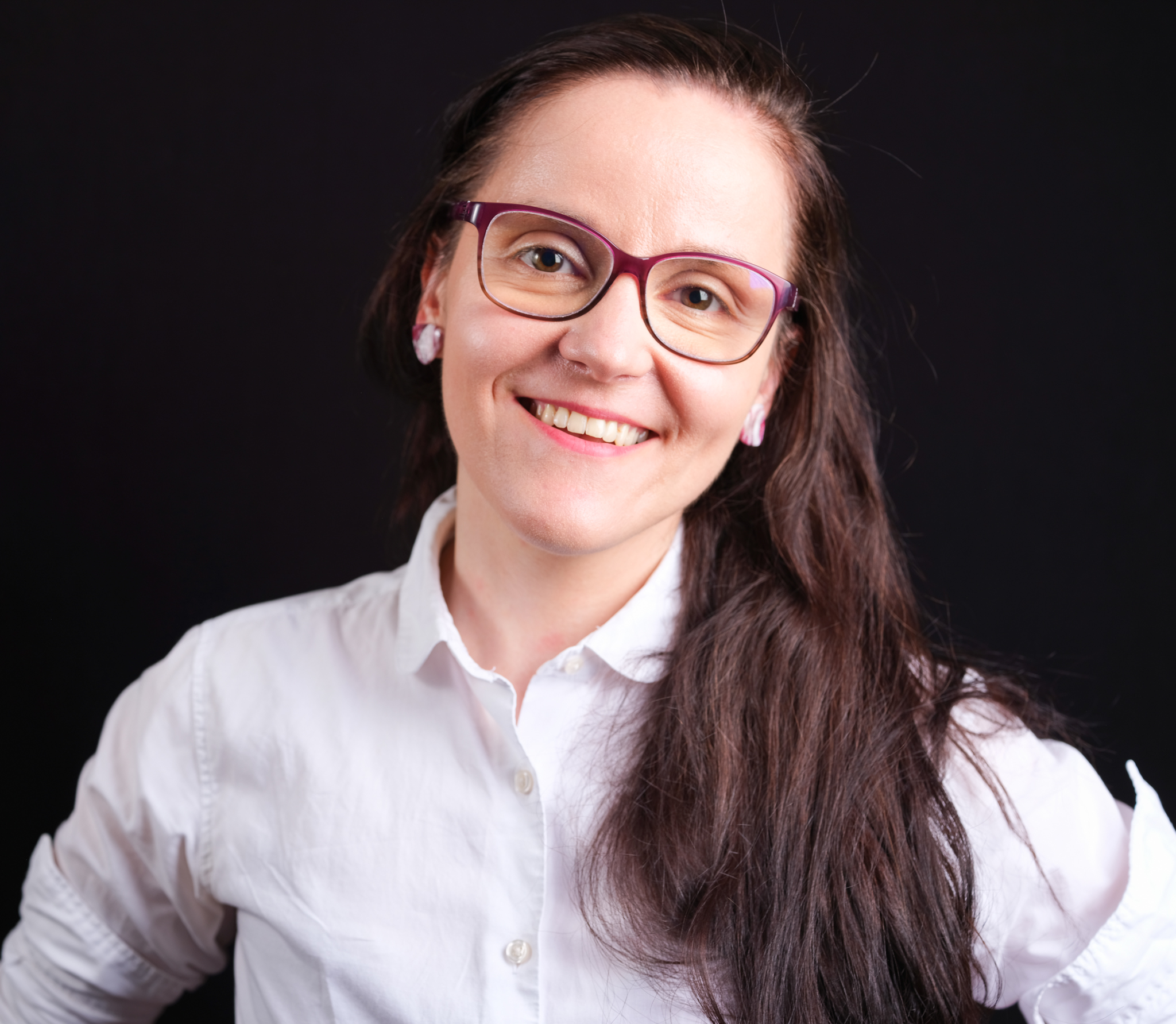
Portrait of Iwona Fluda, founder of VITAORBIT
Photo: Brad Visser
Founder-market fit

Iwona Fluda

AI, human spaceflight and responsible human-performance innovation

Award-winning serial entrepreneur and interdisciplinary venture builder working across AI, human spaceflight, ethics and international innovation.

Applied AIOxford Executive Diploma in AI for Business; applied work on ML decision support for astronaut EVA readiness.
Domain accessAdmitted to the five-month Human Spaceflight Certificate in Toulouse, beginning October 2026.
ExecutionFounder of Ministry of Creativity; international venture, programme and partnership experience.
Responsible designHuman-in-the-loop governance, ethics, consent and accountability embedded from the start.
Next: ML / data engineering Next: space medicine Next: product / governance
View founder profile
09 / 10 · Financial Projections and Key Metrics

Evidence first. Revenue follows validated utility.

The first 18 months are designed to convert technical feasibility, predictive value and expert usefulness into two paid pilots or equivalent commitments and a path to annual licensing.

Illustrative contracted pilot value £100k–300k

Two pilots at the current £50k–£150k pricing hypothesis. Not booked revenue.

Commercial proof is tied to scientific proof.

Pilot contracts Renewal intent Enterprise conversion
12–20Astronaut, candidate or analogue participants targeted.
2–3Primary partner programmes targeted.
≥85%Usable planned data-days target.
24HDefined task-readiness forecast window.
1Secondary elite-athlete validation cohort.

Targets will be finalised with operational, research and ethics partners before prospective testing. Forecast accuracy, calibration and false-ready metrics will be predefined in the protocol.

10 / 10 · Current Status, Timeline, Use of Funds and Call to Action

Move from architecture to prospective validation.

An 18-month, milestone-based programme to build, validate and convert the readiness engine, with human control and governance at every stage.

Current status
Pre-seedSwiss-incorporated venture; no significant dilutive capital raised.
Product definedReadiness architecture, expert workflow and proof plan established.
Pilot protocolFounder-led wearable, cognition and self-report feasibility design prepared.
Domain proximityOxford applied work and Human Spaceflight Certificate admission confirmed.
18-month use of funds
35%MVP and data integrations
25%Model and validation
20%Pilot delivery
10%Ethics and governance
10%Commercial and IP

Timeline: 0–3 months protocol and partners; 3–6 months sandboxed MVP; 6–12 months primary pilot; 12–18 months athlete validation and contract conversion.

01 · Milestone-based capitalFund product, responsible AI, data engineering and prospective validation.
02 · Primary pilot partnersSpaceflight operators, astronaut-training providers, analogue programmes and space-medicine teams.
03 · Research and technologyHuman-performance, wearables, cognition, biomarkers, governance and AI-safety expertise.
04 · Secondary validationElite teams and high-performance centres able to test the engine at greater frequency.

Astronauts first. Athletes second. Readiness intelligence for the most demanding environments.

Potential institutional relationships currently under discussion are not represented as signed partnerships.

VITAORBIT · 10-slide investor and R&D funding deck · 2026

Moonshot Celebration
Oxford, United Kingdom

Copyright © 2026
Made with love
in Europe for the Moon

Terms and Conditions

Language